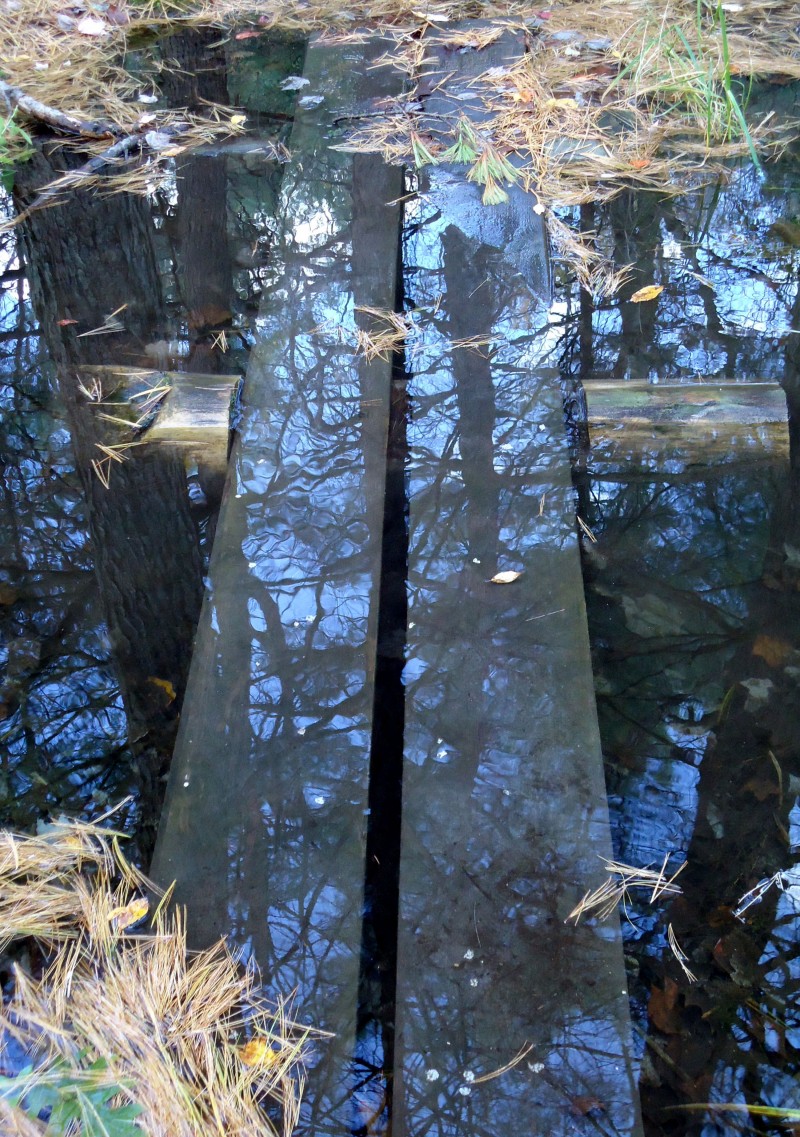
Soul Reflected ~ Diane Prokop
Jessamyn Smyth’s art has appeared in Red Rock Review, American Letters and Commentary, Nth Position, MiCrow/Full of Crow, Wingbeats: Exercises and Practices in Poetry, and many other journals and anthologies. She has received honorable mention in Best American Short Stories (2006), a long list of prize nominations, and is the recipient of fellowships, scholarships, and grants from the Robert Francis Foundation, Bread Loaf Writer’s Conference, and many others. Jessamyn is the founding Director of the new Quest Writer’s Conference, and is faculty in Humanities at Quest University in Canada. She was the founding is Editor in Chief of Tupelo Quarterly.
My home is flat-roofed late 1950’s rambler on a quarter acre corner lot in the town where I was born. Our yard is fully fenced with a large vegetable garden taking up most of the backyard. We share the land with three chickens and several thousand bees from my hives. We also share it with Lucy, the Western Grey Squirrel, Henry the Crow and his extended family, a noisy Rufus Hummingbird, a small hive of native bumblebees who live in a birdhouse, and numerous Black Capped Chickadees, Red- breasted Nuthatches, and Dark-eyed Juncos. We also have regular visits from a Northern Flicker, Blue Jays, and a Coopers Hawk who preys on the little birds at the feeders. We have opossum, raccoons and even an occasional coyote. Bald eagles, Red-tailed Hawks and Osprey are frequently seen soaring the thermals in a brilliant summer-blue sky.
I don’t live in the country, much to my regret. I live a block from a major highway. My night skies are lit with street lamps instead of stars. I watch jets take off from my kitchen window. I am surrounded by auto dealerships instead of the mountains I always dreamt I’d live in as an adult.
I long to garden without the ever-present backdrop of road noise and I deeply wish my nights were only lit by moonlight and stars. I want to live at the end of a dirt path in a cabin at the center of an open meadow surrounded by trees. I don’t want to see my neighbors. But, I also understand that this isn’t reasonable from a financial perspective, much less from a wilderness conservancy perspective. Moving to the country may put me closer to wilderness, but my very presence makes the “wild” less so.
I struggle with how to bridge the gap between what I see as my essential connection with nature and my desperate desire to make sure that I don’t love it to death. I am adjusting my viewpoint about what it means to be “in nature” by appreciating the “urban wild” around me. And while there is no real substitute for the peace of dangling my feet in a mountain stream, wandering through the acres of the county parks around me is a balm to my soul. In truth, any time spent with dirt under your feet and leaves overhead is time spent in Nature in one of her many guises. We must learn to slow down to notice and appreciate the common “wild,” as well as the idealized,rapidly disappearing free and wild one.
Robyn Lynn lives in the Seattle area and has an MFA in Creative Writing from Goddard College. Her work has been seen in the Pitkin Review, Sugar Mule, Minerva Rising, Lumina, various American Cancer Society publications and on her blog at Robynlynnwriter.com
L.E. Miller’s work appears most recently in Nimrod International Journal, the Cimarron Review, and The Drum. Her previous contribution to Ascent, Peacocks, was republished in C4, an anthology of the best fiction published on line that year.
After April moved back to Port Ordway, she saw Ben’s mother everywhere. Like a form of karmic payback, Eulalia appeared, all five-feet-ten of her, whenever April had a coffee stain on her blouse or was buying a candy bar to devour on a bad morning. They attended the same city council meetings and Rotary Club breakfasts, shilling for funds for their respective organizations: Eulalia’s theater company, Players in the Pines, and New Beginnings, run by April, which helps homeless women make a fresh start. April hated it, begging for her mean portion, but Eulalia played it to the hilt, even when her audience was a table of jowly city councilors who had never in their lives heard of Ionesco. No matter how packed the room, Eulalia’s gaze always landed on April. What else could April do but try to return that magisterial smile?
One day, they ended up together at the marble sinks in the City Hall bathroom. Before April could make her escape, Eulalia rested her hand on April’s arm. There, on her index finger, was her ring with its honey-colored stone, which had always reminded April of a throat lozenge.
The antagonist lends a story its dramatic velocity, Eulalia once told her. He or she often reveals a hidden darkness in the protagonist, who ends up fighting a force that comes from within.
Benjamin’s doing wonderfully, Eulalia’s voice echoed off the marble and porcelain of the Town Hall bathroom. No, he’s not a doctor… he works as a civil engineer in Palo Alto, in green energy… yes ,it’s a field with great potential…married to a lovely Filipina girl—an anesthesiologist—and they have two beautiful daughters. And tell me, dear, what wonderful things are going on with you?
I’m a crack whore, April nearly said.
Well into her seventies, Eulalia Becker continued on as artistic director at Players in the Pines, staging Brecht and Ibsen for an audience who would vastly prefer Neil Simon. She kept the house on Harrington Street long after most of her friends had sold their troublesome houses and decamped for warmer climates. Even after the cancer had spread to her bones—impossible not to know, in close-knit Port Ordway—she remained an eminence, draped in cashmere and tiger’s eye beads.
On the day of her memorial service, April went to work dressed in black, ready to pay her respects at the Congregational Church. Eulalia’s husband was long dead—despite his having been Dr. Clayton Parnell, chief of infectious diseases at Port Ordway General Hospital, April would forever think of him as Mr. Becker—but Ben would surely be there, with his wife and girls. The hours ticked by; April got busy with a million things. She never left her desk. She never made it out to buy a card for Ben.
Entrances, exits. One of these actions is generally necessary to advance a story.
One morning in June, April is out walking on the beach. She hears a man call her name. When she turns to see who it is, she finds Ben standing behind her. He’s wearing jogging shorts. A V-shaped patch of sweat darkens his T-shirt.
His curls have been tamed, cut short; his golden-blond hair is laced with gray. He has broadened into middle age, but like many men who were thin as children, his arms and legs are gaunt, the tendons corded. April had been cruel to him, inexcusably so, but surely she can be pardoned on account of her youth. Ben’s great gift was—is still?—his faith in other people’s good intentions. He opens his arms, and she steps into his embrace, his familiar smell after running.
They talk while he stretches his hamstrings. April takes in the coordinates of his life as if anew: his job with an alternative energy firm in California, his anesthesiologist wife, Corinna; their two daughters. He’s back in Port Ordway this week, getting his parents’ house ready for sale. Did she know his mother passed away in November? I didn’t know; I’m sorry to hear that, she bluffs. Ben asks if she still lives in Port Ordway, here on the island. Yes, April answers, she does now. She can’t help thinking Eulalia never saw fit to tell him anything about her.
Any children, he asks. No. Married? Not currently. After a pause, he asks if she would like to have dinner with him. There are a million reasons to say no, but she says, sure, why not?
That night, April arrives at the restaurant before Ben. Following the hostess to a corner table, she feels disloyal to the spirit of her mother, who always harbored particular scorn for the summer people who flounced into Yanni’s for fresh arugula. Still, this restaurant, the pet project a Fortune 500 developer, is the only place on the island to get decent food. Summer nights, reggae blasts on the patio. Women kick off their Manolo Blahniks and dance on the sandy floor.
Ben walks in: quick, as always; light-footed for a man of his size. April has to wonder, despite all her exhortations to the women she works with, how much of one’s past self it is truly possible to shed.
When the food comes, she finds it hard to do more than pick, whereas he is, as ever, boyishly ravenous. He describes his work, his efforts to devise a method to store wind power as potential energy. He passes her his phone, and she offers up the appropriate compliments about his family. His wife and daughters, posed before various European landmarks, vamping on a tropical beach, are lovely: dark-haired and dark-eyed, slender as dancers.
April tells him about her work: the tiny victories the women manage, the rabbits she pulls from hats, keeping the place going on a few hundred thousand dollars a year.
I can see you doing that, Ben says.
Yeah, right. She punches him gently in the arm.
Nothing has been offered or accepted, but they drive in Ben’s rental back to April’s house. They’ve exhausted all the safe and almost-safe conversational topics. Everything else is pocked with hazards. But when they turn onto Twenty-Second Street, she finds she’s keen to show off the new porch, the new kitchen, much of it from Ikea, but still. She tossed out her mother’s unredeemed bottles, the stacks of half-finished crosswords, gull bones, seashells crumbled to sand. She ripped up the cracked linoleum, painted the grease-stained walls light, optimistic colors.
See: nothing but sanity here.
Leading Ben through the rehabbed rooms, she senses his particular physicality, so different from Tyler’s, who was—still is—compactly built. She senses her own body, strong and, with great effort, reasonably lean. When she was younger, her features were too severe for beauty, but at forty-five, she believes she has grown into her looks at last.
You could be a young Angelica Huston.
Eulalia’s voice carried traces of a Louisville drawl, but she will speak forever in April’s memory with an English accent. For April at sixteen, no other accent could contain such grandeur.
“It looks terrific. Did you do the work yourself?”
She tells Ben she did the painting and some of the tiling. “I guess I wanted to keep it.” Ben looks momentarily startled. She catches her unintended double meaning. “The house. Keep the best of my mother.”
Ben nods and taps the molding above the living room doorway. She glimpses, again, his wide gold wedding band.
He tells her he should get back to his parents’ house, spend a few more hours packing up. She says she understands. They shake hands at the door.
Later she wonders: why the need to perform for him? Her life is a good one, filled with meaningful work and friends. She had her own junket to London and Paris: two pound- and euro-pinching weeks, but still. Her divorce is no longer pure heartbreak. She now sees that she and Tyler weren’t destined to last. Nor is she troubled by the flickers of attraction she felt earlier for Ben. Those she writes off as muscle memory. It’s her preening she hates, her need to prove she has amounted to something after all.
She pulls on jeans and a sweatshirt and walks to the beach. She does this on sleepless nights, when a vestigial craving for cigarettes comes back to plague her. Her mother, a career insomniac, used to nudge her awake at three in the morning.
It’s all we need. You and me, the sand and the water.
Together, they spent days looking for sea glass. They built houses from driftwood, seaweed, and mussel shells. Nights, they went out to see the moon. Prowling through the neighbors’ trash cans became, in her mother’s company, a treasure hunt, a grand adventure. Over time, April learned other mothers didn’t root through people’s trash; they showed up at school for their children’s concerts and plays. When her second-grade teacher arrived unannounced at the house one day, April saw the place as a stranger would: the porch piled high with yellowing newspapers, the smelly room-sized weaving she and her mother were making from a scavenged fishing net. April hid in the bathroom while mother talked to her teacher through the door. A year later, her mother quit her job at Yanni’s Island Market. A woman with my intellect has no business selling Scratch tickets. She lived on disability, packaged pastries and Jeopardy! until she died, without ceremony, in a nursing home.
***
At his parents’ house—and for him it will always be his parents’ house, no matter who lives there next—Ben surveys the boxes he has packed and piled up in the front room. There have to be forty of them, but there are countless more to go, along with the furniture still to be picked up by the antiques dealer. Everything else will go to Goodwill. The pieces his mother once selected with such deliberation are little more than detritus now.
The word is de-tri-tus, his mother once corrected April’s pronunciation of the word.
Can that be true?
Packing up, Ben has wished he had a sibling to help him, a whole raft of siblings the way Corinna does. Siblings would know what to keep or discard of their parents’ things. They would confirm his memories, temper his judgments.
These days, Ben isn’t much of a drinker, but he picks his way through a maze of half-packed boxes to the highboy and pours himself a splash of single-malt. The stop at Smitty’s on his way north from the airport has become a ritual. His father appreciated a good scotch, and later, it offered Ben some release from attending his mother’s dying.
He sips from the broad glass. His father once had a set of six, engraved with the Yale insignia. As a boy, Ben would trace the mysterious Hebrew letters with his finger.
Are you of the Jewish persuasion?
April’s mother never asked the typical parental questions about school and college plans; she asked only inappropriate questions, incomprehensible ones.
He settles into his father’s old wing chair—slated for Goodwill—and calls home. At the sound of his younger daughter’s voice, he feels restored to himself, re-anchored to his tenable roles as husband and father. Mia tells him about the swim race she had that day. She placed second in the hundred-meter freestyle, just two seconds behind the winner, but once she discloses this news, she hands off the phone before he can congratulate her. His older girl, Lina, is chattier. Most days, she’s at war with Corinna but she is, for the moment, enthralled with him. She fills him in on the latest dramas of sixth-grade girlhood, which seem to him as tangled and malevolent as those of the Florentine court. To his great relief, Lina is neither a victim nor an instigator of cruelty; dressed most days in cutoffs and rainbow-colored tights, her role is that of an amused observer. He promises her gifts from his parents’ house. He has already set aside some beaded necklaces and a snow globe for eight-year-old Mia. What will please Lina at this transitional age? What will please Corinna, who favors clean modern lines?
Corinna takes the phone. Against the backdrop of cabinets slamming, water running in the sink, she ticks off the surgeries she attended and what the next day’s labyrinth of a schedule holds. Early on, he discovered Corinna’s brisk persona is a mask she wears, to command respect in the OR, to compensate for being small and Filipina. He treasures his private knowledge of his wife’s softer layers. The calls he makes to her, late at night, thick with breath and desire, hint at the reunion they both anticipate once he gets home.
“I ran into an old friend from school. We ended up eating together,” he says, answering her question about what he did for dinner.
If she asked him whom he met, he wouldn’t put the effort into lying. Being with April evoked its share of memories, but everyone knows there’s a huge gulf between thoughts and actions.
Lina’s voice rises in the background, and Corinna snaps, We talked about this already, and I said no. “It’s crazy here,” she tells him. “We’ll talk again tomorrow.”
“Love you,” he tells her.
“Me, too,” she says, “But now I really have to go.”
It seems to Ben he has always known April Whittaker, one way or another. The first time their kindergarten teacher called out her name, he had to turn and see the girl whose name was also a month.
Bussed in with the other kids from the island, she was like no one else at school. She wore skirts made of gauze and sparkles or crazy clashing patterns: stripes with dots. Her tangled black hair concealed her pale, fierce face. At recess, she wandered at the edge of the schoolyard and murmured to herself, absorbed in vivid make-believe. Whenever Ben could, he watched her. It was not in his nature to ridicule; he was merely curious.
Rumor was April Whittaker was brilliant, but it was a surprise anyway, having her in his Honors classes in high school. Island girls, girls who wore hobbling pileups of silver rings, who smoked in the courtyard during lunch and sat doodling in the back of every classroom, almost always languished in standard-level classes. But by high school, Ben didn’t think about April much at all. He had his schoolwork, his running, his friends.
The summer before their sophomore year, he had a job babysitting a girl on his street. The girl, Cecile, had Down syndrome. Ben watched her mornings before she attended her special education program. Every day, he brought her to the island’s beach. He didn’t let her play in the fierce ocean waves, but Cecile accepted this as she accepted everything, with placid silence. Over the course of their long mornings, Ben developed a protective affection for her. It was dull but also restful to exist in her largely wordless, elemental world. He came to resent the tight, do-gooder smiles some adults granted her, other children’s point-blank stares.
Cecile was the one who noticed April, sitting on a kelp-streaked rock. She must have been drawn to April’s dark hair lifting in the breeze, the glint of silver in her ears. She grunted and pulled him forward by the hand.
April stubbed out her cigarette against the rock. She turned around and regarded Cecile directly.
“Hi,” she said, but not in the fake, sunny way other people addressed her.
“Hey.” She greeted Ben more vaguely, as if trying to determine which preppy jock he was, exactly.
He saw April at the beach most mornings. Despite the summer heat, she wore her school-year clothes: dark jeans, dark shirts, suede boots. She came over to their towel and dug with Cecile in the sand. Whenever Cecile pointed to the water, April went down to the foaming edge in her salt-stained boots and filled the pail. She gathered mussel shells, which Cecile pulverized in her hands.
Every morning at eleven, she dropped her cigarette butt into an empty soda can.
“Time to go sell brats more crap they don’t need.”
“Can we walk with you?” Ben asked her one day, startled by his own boldness.
April laughed so hard, she started snorting.
“Walk with me? Why? To protect my virtue or something?”
At school that fall, Ben returned to his running and his friends, April to her legendary brilliance and solitude. But she was vivid for him now, with her thick hair, her rounded cheeks and soft-looking lips, her body. It was April who sashayed through his dreams, not the usual lineup of perky blonds. He remembers that year as one of the longest in his life, dogged by chronic sexual arousal and lurching start-and-stop conversations with April that left him wanting to punch a wall. Exactly how, many months later, he managed to cross that treacherous border and take her hand, he still can’t say. Her hand trembled in his like a hummingbird. She kept hold nonetheless.
She continued eating alone in the lunchroom: her choice. She had to study; she had her afterschool job at the toy store and the shopping, cooking, and cleaning to do at home. She didn’t attend his track meets—and sue him for being a Neanderthal, but he wanted her there, cheering him on. They were a couple only in his room, in the woods, on the beach, in the back of his mother’s station wagon. If Ben often felt he was a step behind her, if her humor had an edge he didn’t entirely like, he understood she was hiding something fragile and unguarded in her, something dreamy and childlike. Once, she read him a poem she’d written in one of her Sharpie-covered notebooks. The images skipped so feverishly from one to another, he found them hard to follow.
“It’s great,” he said told her when she was done.
“Oh, God, Ben, no. It sucks royally.”
One time he asked her, “Do you ever see your father?”
April laughed. “What father?”
***
Two days later, April’s phone rings at work. It’s Ben.
Whenever someone calls in from the outside world, a foundation director or a bank vice president, she sees anew the shabby, makeshift quality of her office, a slope-ceilinged attic room, which she shares with the case manager and a rotating band of part-timers. Across the room, Annie, the case manager, is meeting with Nicole, one of New Beginnings’ toughest cases.
“He’s a cocksucker! I told you I can’t work for that ass-wipe!” Nicole paces back and forth on the donated carpet.
“Is this a bad time?” Ben asks.
“No more than usual.”
“When I was packing up my mother’s things today, I found some stuff you might want. For the women, I mean. Jewelry and scarves and so forth.”
Nicole wails, “I am depressed! I’m dual diagnosis! I got a doctor’s note!”
“Do you want to stop by later and take a look?” Ben’s voice sounds faint, as if he’s calling from a distant country, one with white-gloved butlers and croquet. “I can make dinner. This is the last night I can make this offer, because the furniture’s leaving tomorrow. Thirty-eight Harrington.”
“I know,” April says. “I remember.”
“Right, luvvy,” Annie croons to Nicole. “Let’s take it down a notch.” With her earthy Liverpool accent, she has talked many clients off the psychic ledge. It’s no secret why she handles the crises while April manages the balance sheets.
She tells Ben, “Sure. Dinner sounds fine.”
Now she stands on the porch outside Thirty-eight Harrington Street with a loaf of fresh bakery bread. How many times has she stood in this very spot,weak-kneed with nerves and lust? What harm can come of it? Annie said earlier. You’ll keep your knickers on. Still, April knows her wisest move is to get back in her car and drive away. Forget the donated baubles.
Ben comes to the door with a dishtowel slung over his shoulder, as if she has caught him burping a baby. He looks puzzled, and she wonders if she has come on the wrong day.
“The bell’s not working?”
“I probably didn’t ring hard enough.”
“Old house; stuff’s broken,” he says tactfully. He thanks her for the bread.
Inside, she sees the fleur-de-lis wallpaper, with its hypnotic repeating pattern. The carpets have been taken up from the floor, but the familiar smell, cinnamon and raw wood from his father’s basement workshop, still lingers. The Kennedy Compound, her mother called the place. Here, April learned that hush has a cosseting density, thick like good towels, and there’s a vast difference between antique furniture and that which is merely secondhand. Now, the rooms are a mess of boxes, packed and half-packed. She knows what a job it is, packing for the dead.
She walks with Ben to the kitchen, with its six-burner cast-iron stove. Spiced wine used to mull there, for the Players’ closing night parties.
Would you like some tea? Eulalia asked April the first time Ben was home late from a meet and they were stuck in the house together.
I don’t like tea, April replied, blunt in her social unease.
There was an awful wordless moment. Then Eulalia laughed. I see you’re a woman who speaks her mind.
“The chicken’s not ready yet. But there’s wine.” Ben gestures to a bottle of Chardonnay on the counter.
Wine is probably not the best idea in the world, but April says she’ll have a little. She keeps a tactful distance while Ben wrestles with the corkscrew. Finally, he curses softly, and she steps in to help. She waitressed her way through college; she can handle tricky corks. Once she pries it out, she hands the bottle back to him so he can pour. Without quite meeting each other’s eyes, they clink glasses.
“You probably want to see the things,” he says. “Why don’t you just go up? Second door on the left.”
April takes her glass—a juice glass from the dish drainer—and wanders into the dining room. Manila folders cover the table. She remembers the formality of eating there: matching linen napkins, no Jeopardy!, the silverware so solid in her hands.
This is April, Benjamin’s friend. She lives out on the island. But you just watch: she’s going to set the world on fire.
At the cast parties, Eulalia threw the pocket doors open so the actors and crew members could move easily from room to room. Everyone vied to tell the most outrageous stories: about a brilliant English director who showed up blindingly drunk, another who was caught screwing the lead actress minutes before her entrance. And did I say he’s queer as a three-dollar bill? Eulalia sailed from one group to the next, her red curls seemingly aflame.
Oh, go ahead, she said when one of the caterers mistook April’s age and offered her champagne.
Under Eulalia’s direction, April saw Anouilh’s Antigone. She saw Waiting for Godot, Orpheus and Eurydice and The Seagull. The actors performed in an outdoor amphitheater; the audience watched on backless wooden benches.
Would your mother like to come see a performance? I can easily give her a complimentary ticket.
The two mothers met once. Eulalia was fluttering, gracious, pretending mightily that April’s mother wasn’t morbidly obese. Small-town talent, April’s mother declared afterwards.
Even at sixteen, April understood that Eulalia overreached, strained the capabilities of her actors. Nonetheless, the world became radiant in Eulalia’s plays. Love and grief, rage and regret assumed mythic proportions. April wept when Orpheus lost Eurydice forever, when Konstantin shot himself at the end of The Seagull.
Sometimes she believed she’d been born to the wrong mother.
The front room is empty except for the boxes stacked against the wall. Looking up, she notices a stained glass window high up in the wall. Fitted with squares of red and yellow glass, it is not a spectacular one. How could she have seen it before, with Eulalia sitting across from her, bright as a planet?
My sisters were the perfect ingénues, soft-spoken and charming. That was a role I never could play. I’ve always lacked the inclination to be demure.
The name is pronounced Na-bok-ov. Most Americans get it wrong.
I believe the role of theater is to challenge and transform the audience.
Every love story is also a ghost story.
April must have noted the window finally because of her ex. Tyler was a stained glass artist. Still is. Still has his studio near Boston.
She needs no reminder which was Ben’s room, with the Hendrix poster, his trophies, his spunky teenage sheets, nor has she forgotten which one was Eulalia’s—Eulalia’s and Dr. Parnell’s. More than once, Eulalia led her there, to a closet practically larger than April’s entire bedroom, to drape a scarf across her shoulders: something to lend your outfit some panache. With a few twists of the silk, Eulalia deemed her fit to join the glittering buy finasteride online prescription world downstairs.
On the dressing table she sees the scarves and berets Eulalia used to hide the effects of her chemotherapy. Her jewelry box is there, too: a hinged contraption of stacked trays. April remembers: she pulls on the knob and the trays come apart like sections of a tangerine.
There are the necklaces of amethyst, jade, bloodstone, tiger’s eye, the ring with the amber stone. Removed as they are from Eulalia’s person, they are like treasures from a tomb.
Once, in the blush of universal permission April always felt after sex, she sat at this dressing table, trying one pair of earrings, then another, up against her ears. What are you doing here? The earring she had been holding slipped from her fingers, but Ben had merely sounded amused.
Just finding a gem to wear to dinner, she answered in a ringing Queen Elizabeth voice. Seeing him with his jeans loose and his curls wild, she recalled a line in a pop song: You’re so beautiful, I could die.
“Find anything?” When she turns toward him now, he is middle-aged just as she is, graying, slightly harried.
She thinks of the New Beginnings women, hunkered in their sexless hoodies. Diamonds are what they want, that manufactured symbol of love.
“Sorry. The women I work with like more bling.”
“My mother definitely had her own sense of style,” Ben says with a levity April is quite sure he doesn’t feel. “Dinner’s ready, such as it is.”
He has made such an effort, given what little he had to work with. He has cleared the folders from the table, set out paper plates and plastic forks and knives. He has carved a roast chicken, made salad, sliced April’s bread, set out the Chardonnay. She’s hungry; she loads her plate. She doesn’t protest when he tops off her glass with wine.
“Cheers.” He lifts his glass in her direction.
A few more inches here or there, and their hands would be touching. A few more drinks, and they might end up on the floor, shedding clothes. Will her body still remember his? Will his body still remember hers? This is not a road she should be going down, but here she is; she can’t help it.
“Tell me about the woman who’s taken over the theater,” he says, looking up from his plate.
“She’s young. Severe. Her first production was The Beauty Queen of Leeanane.”
“I don’t know it.”
“It’s a claustrophobic mother-daughter thing. The ending’s pretty brutal. Obviously, she’s keeping up your mother’s tradition of tweaking Port Ordway’s bourgeois sensibilities.”
Ben frowns. He studies her for a beat longer than is necessary, comfortable.
“Listen, I’ve been wondering…and if it’s too personal, tell me…what happened with your marriage?”
April closes her eyes. What she finds most humiliating is its clichéd aspect. “He couldn’t keep it zipped. I mean, one time. Actually, it happened more than once but with just one person. Which ultimately makes it worse.”
“Did you two go to counseling or anything?”
“We had a few obligatory sessions. But there isn’t really much to work out after something like that.”
“I suppose not.”
“Yeah, well….” The wine she gulps stings her nasal passages. “Now I have a question for you. What happened with med school?”
“I kind of flamed out in college. But it’s fine. I like what I do.” He pours more wine into his glass and holds the bottle in her direction. She should have stopped one glass earlier but she nods. He refreshes her glass, too.
“Listen,” he says. “There’s something else I’ve been wanting to ask you.”
April’s heart begins to pound. She’s had too much wine and not enough of the food piled on her plate. He’s asking her to reveal too much, strip away one layer after another. She cannot dredge up one more deflecting joke.
“I’m wondering, and if it’s too personal, that’s fine…I’ve been wondering why you never had kids. I mean, I hope there weren’t any complications after, which made you…physically unable….”
She blows out a long breath. “No, there’s no medical reason. Tyler and I…I guess it wasn’t that much of a priority for us. Looking back, it was probably all for the best.”
“I’m glad. I mean that there weren’t any complications.”
After Godot closed, Eulalia was uncharacteristically somber.
Something was off with the production. It never quite hit the mark, did it?
At each performance, April had the impulse to laugh at Vladimir and Estragon, those two sad sacks. Yes, they were tragic, she told Eulalia, but weren’t they funny, too?
Some directors play it as comedy, go for the easy laughs. But Beckett wrote Godot after the war. Europe was in ashes. I don’t think playing it as slapstick really fits the bill.
“Now, I have a story for you,” April says. “Something I never told you.”
Ben sits up, but his face merely reveals curiosity, betrays no dread.
“One night, your mother gave me a ride home. You had a test or something the next day at school, so she drove me.”
Driving, Eulalia was uncharacteristically quiet as they passed the river and crossed the bridge onto the island. When they reached April’s sagging little house, Eulalia cut the engine. April, she said, just her name, and April froze, braced for whatever was coming next.
“When we got to my house, she asked me if I was on the pill. I mumbled something about not having to worry, but she offered to take me to Planned Parenthood anyway.”
“Tell me she didn’t.”
“She did.”April laughs mirthlessly, her face hot from the wine. “She talked to me about hormones and how powerful they are. How it’s good to be prepared before temptation strikes.”
Ben shakes his head. “Not that I wouldn’t say the same type of thing. But Jesus. My mother.”
“My mother, your mother. They were both a piece of work. Shall we clear?”
They carry everything to the kitchen. The windows are open. April is grateful for the breeze. She and Ben work silently, wrapping food, tossing paper goods in the trash. With Tyler, she enjoyed cleaning up. They’d blast merengue and dance while he washed and she dried. Shopping, cooking, doing dishes: married at twenty-four, she’d relished these tasks, because they seemed so grownup, so normal. Playing house. For a long time, she had believed this would sustain him, too.
Ben says, “My eleven-year-old would call me on the carpet for throwing out all this paper. She’s very strong-willed. She gets it from both sides, from my wife and my mother.”
His wife: one more ghost in the room.
“Strong-willed is good. It’s healthy.” April reaches for her purse. “Early day tomorrow.”
“You’re good to drive?”
“Right as rain.”
He walks her to the door. Most likely, she’ll never see him again. Once the house sells, he’ll have little reason to come back. Or if he does, he won’t call her. He has accomplished what he set out to do: to know she’s more or less okay and he can live the rest of his life scot-free.
If there’s a candle to blow out, she wants to be the one to do it. At the door, she rises up and kisses him squarely on his mouth.
***
Whenever Ben’s older daughter bumps her head against a cabinet, she hits it again in the same place, claiming the second bump takes the pain away. Why is that, Lina asked once, and Corinna speculated about endorphins and neural pathways until she finally admitted she had no idea. Ben wonders if he has been enacting something similar with April, returning to the locus of the pain to exorcise it.
Back home in California, it’s still late afternoon. Corinna’s finishing up at the hospital; the girls are at their various activities: swimming, art class. He opens his laptop and tries to chip away at a presentation his team is due to give next week. Yet another venture capitalist has come knocking, some thirty-five-year-old software tycoon looking for a socially responsible project with which to occupy himself.
An hour later, he has gotten nowhere with his presentation. He still feels April’s kiss on his lips. Did he honestly believe street women would want his mother’s hand-me-downs?
He thinks of the Sucrets tin upstairs in a nightstand. The tin was once packed with joints, procured and rolled by Jeff Radtke, his mother’s one-time lighting designer, to relieve her pain and nausea. A few times during her last year, she and Ben sat out on the back porch and smoked together. He always lit the joint for her, like a suitor.
This may surprise you, Benjamin, but I am on familiar terms with marijuana.
When he last checked, there were three joints left in the tin. But he knows too well the sequence of events that will ensue if he smokes it: a pleasant detachment, then a gnawing, generalized horniness, which will lead to an hour lost trawling for porn on the Web. He’s in no shape for it now, not after a big dinner and the wine, but he shuts his laptop and changes into his running clothes. He gets into the rental car and heads out toward the island, where there will be miles of relatively empty beach.
He takes the road that skirts the river, one of the places where he and April used to park. Every damn place in town holds a memory of her: her smoky breath, the weight of her breasts in his hands. The pain isn’t much relieved by his experiencing it again.
Over the bridge, Ben passes the salt marsh, the flats, where his father used to take him to dig for clams. His father taught him to burrow through the sand with his bare toes, and when he found one, to pry the shell open and swallow the briny thing whole. Now, like everywhere, the island is in peril. Algae’s blooming in the marsh. The beach loses several feet to erosion every year. Ben no longer dares eat anything raw.
He passes Yanni’s Market and the overpriced restaurant where he and April ate several nights ago. He turns north. At Twenty-Second Street he slows. Here arguments were loud and public, fueled often by booze. One woman kept spider monkeys in a trailer parked in her yard; another let her half-feral dogs roam the neighborhood. April’s mother had a beef with everybody, shouting at them from the street in her ripped-up jacket.
Ben drives on, past the luncheonette where he used to park his bike and trailer and guide Cecile to the beach. During his mother’s last year, he brought her here too, leading her down the same path so she could have an hour at the ocean.
Can I bury you, Nana? Just last summer, his younger daughter pranced on the sand with her pail and shovel. His mother smiled ruefully and offered up her swollen feet.
It was easier to love her after she got sick.
Ben drives to the island’s northernmost point. He gets out of the car and walks to the far edge of the parking lot. In the distance, a party boat sails by, its masts twined with lights.
It was here, November of their senior year, that April produced a plastic wand, wrapped in a paper towel, from her knapsack.
“Look,” she told him.
He had never seen a home pregnancy test kit up close before, but she didn’t have to say anything more.
“I’ll marry you,” he blurted out.
“That’s okay,” she said quickly, letting him off the hook.
April knew right away what they should do; she said there was no other decision to make. People always tell you to have the baby and then give it up for adoption, like it’s no big deal being pregnant for nine months, giving birth, and then handing it over. He wasn’t the only one with plans, she finally yelled at him. She had a life, even if it didn’t look like it to anyone else.
There were phone numbers to look up—it amazed him to see the numbers right there in the Yellow Pages. There were places to call. They learned she would have to cross state lines to avoid needing her mother’s consent. They learned it would cost three hundred dollars. With that news, she broke down, clutching him. He sat next to her on his bed when she made the appointment: Tuesday after Thanksgiving.
Trying to live normally—sit in class, do his homework, eat Thanksgiving dinner—was a joke. At night, he lay sleepless, rearranging the variables, sending the hypothetical marble down different chutes. If he had done Y instead of X, would they have gotten an alternate result?
Tuesday after Thanksgiving, Ben told his mother some story and got use of her car for the afternoon. He and April left school together and drove up the Interstate, past the turnoff for the beaches north of the island, past the shuttered boardwalk games, where’d he won a stuffed Dalmatian for her the previous summer. At the state line tollbooth, he half-expected police to swarm, but he just paid the toll and drove through. Bare trees, a package store, brown fields. April read off the directions, which she had scribbled inside her notebook. Along a bypass road, past the Agway and a McDonald’s gleaming from the top of a hill. The clinic was in a converted farmhouse, the kind of place where, up in ski country, a lady might be selling pies. At the edge of the gravel parking lot, he noticed several protesters, older men and women, standing quietly. At least no one screamed at them. At least no one shoved gruesome pictures in April’s face.
Inside at the receptionist’s desk, there was a bowl of condoms set out like peppermints at a restaurant. Ben glanced at April, hoping the share the absurdity of it—hot sex at the abortion clinic!—but she just gave the receptionist her name. Her hands shook when she pulled the bank envelope out of her backpack. She counted out three hundred dollars: money he had earned mowing lawns over the summer.
They were sent down the hall to a waiting room, where April filled out a stack of forms. While she checked things off and signed her name on dotted lines, he looked circumspectly around the room. Of the five other women sitting there, only one girl looked young like them. Her skin was very pale, the rims of her eyes pink like a rabbit’s.
After some time passed—impossible to say how much; everything about the place, the shades over the windows, the formless music playing on the sound system, seemed to have been put in place with the goal of effacing time—a woman appeared in the waiting room. She was like dancer in an MTV video, Ben thought, with her skinny, unisex body; her studded earlobes, her hair buzzed short, except for one dark sheet of it, which fell across her face and skimmed her left shoulder. He didn’t know what he had expected, but it wasn’t anyone who looked like her.
“April?”
When they both stood up, the buzz-cut woman said, “Just April. I’m Sage, one of the counselors here,” she added, holding out her hand.
He expected April to throw him a look that said, Sage? You’re kidding, right? But she just said hi and followed the counselor out of the room.
On any other afternoon, April would be working at the toy store, and Ben would be heading to Scott Fisher’s house. Once, just once, Ben had run out of condoms, but April nodded: go ahead; it’ll be fine. When they lay together afterwards, rain pattering against his windows, they forgot to worry about it or anything else. So here he was now instead of in Fisher’s basement, suspended in the pseudo-stoned bliss of air hockey. The young girl had her mother beside her. Couldn’t April’s mother drag her three-hundred-pound self out of the house, do this one thing for her daughter?
Of course he was glad they were here instead of some sketchy back-alley place, but if he didn’t leave the room, with its mauve walls and endless track of Windham Hill music, he was going to start punching walls. He was going to rip the CD out of the player and break it in two.
He fled the waiting room. He fled the clinic. He stormed past the protesters with their earnest, handmade signs. He hated their quiet self-righteousness. He hated them for denying him his chance to fight.
He began to run, down the gravel driveway and along the road. The cold air seared his lungs, but he kept running, past a church and a tiny graveyard. The cross country season had ended, and his conditioning was already starting to slip. His jeans chafed his thighs; his ski jacket bounced heavily on his body, but his feet kept pounding, past small Capes, woodpiles covered with tarps, a scarecrow left out from Halloween. He knew, in general terms, what was happening to April now. When she’d made the appointment, the woman on the phone had explained the steps to her, and she, in turn, had laid them out for him. When she asked if it was going to hurt, the woman said, probably some. If he went back, could he rescue her? Marry her?
Ben’s strength as a runner was speed rather than distance, but he labored up a hill, kept running. The burn in his legs subsided to a faint hum. The sun was low in the sky. He wanted to follow the light west, cheat the gathering dark. He wanted the future to be now, now, now.
Spent finally, he turned back. Only the worst kind of asshole would abandon his girlfriend at a time like this. And at least he wasn’t that.
When he saw April again, she could hardly walk. He didn’t know if he should touch her, if his touch would make things worse, but he took her arm and guided her past the front desk with its bowl of condoms. “Take care, now,” the receptionist called to them. April raised her hand to wave. Ben said nothing. He led her across the empty lot into his mother’s car.
“At least the protesters are gone,” he said.
“I would kill for a cigarette,” she answered.
She pulled a bag of peanut butter cups from her backpack. Her main pregnancy symptom had been a fierce craving for sweets, and she peeled the foil off one candy after another and gobbled them down. She shoved the wrappers in the armrest beside her. There were many other scraps of foil jammed in there from the ride up.
April chewed extravagantly, a blazing fuck-you to whatever he might think about her stuffing her face. She slid one tape after another into the car’s player. A few seconds into every tape, she punched the eject button and tossed the cassette between them on the seat.
“Careful,” he said. He felt like a first-class dick.
She reached for another Reese’s cup and dropped the wrapper on the floor.
“Are you just going to leave those there?”
April said nothing. They passed the package store, the dead fields. At the tollbooth, Ben paid and drove through. As they approached the sign welcoming them back to Massachusetts, she finally spoke. “Not that you asked, but it hurt like a motherfucker.”
He reached for her hand, found empty space. “You know I would have gone in your place if I could.”
“Yeah, well…”
He had never before heard so much animosity packed into two small words.
The party boat blasts its horn. It might be a cruise for high school seniors. Their class had a similar excursion. He didn’t go.
“What if there’s only one girl who’s meant for you and you lose her? What do you do then?” he mused a year later, in his dorm room at Syracuse. He was doing shots with his roommate and some guys from down the hall. His plans for medical school were drifting down a river of beer and poker, Pac-Man and weed.
“Sheesh, man,” his roommate said. “That’s deep for a Friday night.”
From time to time throughout their senior year, April came up to him at his locker.
What did she want? Just to hand over fives and tens and the occasional twenty and walk away when he tried to refuse them.
“There,” she said, once she’d paid what she thought she owed him. “We’re done.”
***
After Ben closes the door behind her, April stands out on the Becker-Parnell porch, desperately needing a cup of coffee. Under the circumstances, it would be plenty awkward to ring the bell and ask for some. Better to walk ten blocks to the convenience store for a cup of sludge— penance for her indiscretion: the story and the kiss.
There is one part of the story she didn’t tell him. The night his mother drove her home, Eulalia didn’t end her speech by musing on the unpredictable nature of teenage hormones. She said this: I’m asking you to be careful with my son. He’s idealistic. Emotionally young. He’s not worldly like you are.
The light in the sky is starting to fade, but at this time of year, the sun will set slowly, streaking the sky with bands of orange, gold, and violet before it disappears. It is good to walk.
April continues along several blocks, passes the turnoff for the high school. She walks a few blocks more and comes to the town cemetery. When she was young, her mother instructed her to hold her breath whenever she passed it so the spirits wouldn’t enter her body. Later, her mother told her not to enter the graveyard late at night, always stay on the lit side of the street.
By her senior year of high school, April always walked on the dark side, the graveyard side, daring whatever psycho killer might be lurking behind the wall. Once, she had sex there with a boy who spent his afternoons skateboarding in the brick plaza behind the toy store. His inability to string three coherent words together never gave her a moment’s pause. Go have a great life, her counselor at the abortion clinic had advised her when it was done, but while Ben continued to win his trophies, April did the opposite. She drank; her grades dropped; she had sex with boys she despised.
She walks through the cemetery’s gate. Later, some of the New Beginnings women will slip inside; this is one of the places in Port Ordway where they trade sex for drugs or cash. She and Annie come here on night outreaches, to offer them the possibility of change.
Eulalia must be buried here; a granite slab must mark her place. April’s own mother wanted to be cremated, her ashes scattered at the beach. April knows she should feel her everywhere, but her absence is just a hole inside her, an aftertaste of guilt.
One night during her senior year, April dropped a tray of microwaved lasagna, and she began to bawl. She hadn’t realized tears were coming—even in the Aftercare room at the clinic, where everyone else cried, she did not—but months later, with that crummy lasagna on the floor and her life a total wasteland, she let go.
One week after the procedure, when she was still bleeding, Eulalia had ushered her through a party like a show dog.
This is Benjamin’s friend. She lives on the island. Watch out for her. She’s a live one.
April forced herself to smile. The guests smiled back indulgently. Inside her, something snapped and fell away.
At the door, she said to Eulalia, We don’t have to do this anymore.
Do what, April? What on earth are you talking about?
I don’t have to pretend to like you anymore and you don’t have to pretend to like me.
April waited for Eulalia to touch her wrist and tell her not to be silly; she liked her very much. But she merely replied with frayed dignity, much like Irina Arkadina at the end of The Seagull: All right. If you don’t like me, by all means stop pretending that you do.
The night April dropped their dinner, her mother pulled herself up from the table and looked at the mess on the floor. She lumbered over to April and held her.
He’s not worth it, she said, misunderstanding the source of April’s grief. But the pressure of her mother’s hands on her back steadied her. A junior in college and pregnant from a one-night stand, she had let April grow.
Now, in the graveyard, April reaches inside her pocket. Her fingers meet smooth amber. In the distance, she hears nerved-up teenage laughter. She closes her hand around Eulalia’s ring.
In truth, she does feel her mother’s presence sometimes, when the wind picks up before a storm.
John Picard earned his MFA from the University of North Carolina at Greensboro. He has published fiction and nonfiction in Iowa Review, The Gettysburg Review, New England Review, Alaska Quarterly Review, Mid-American Review, Hayden’s Ferry Review, West Branch, North Dakota Quarterly, and elsewhere. A collection of stories, Little Lives, was published by Mint Hill Books.
It wasn’t supposed to be this way. When Jenny imagined her father’s death, she’d always pictured Rob standing next to her, ready with a hug and a comforting word, and her sister and brother-in-law close by offering additional support. At the appropriate moment, they would all take turns saying goodbye, telling the dying man how much he’d meant to them, how much he was loved. That done, they’d witness his peaceful and dignified exit from the world, his eyes slowly closing, his head lolling on the pillow. Instead, she was alone with a nurse she didn’t know and it was all she could do not to run out of the room again.
She’d returned both times embarrassed in front of the RN with the unusual name. Stout and fiftyish, Verda was a person of few words who, whenever she entered the room, stood in the corner with her arms crossed, saying little and rarely if ever smiling. Not that there was anything to smile about, but whenever Jenny asked a question Verda answered in a clipped, no-nonsense manner that was off-putting as well as doing little to assuage Jenny’s feeling that her family was being judged. Rob had been telling her for all of the twenty years they’d been married that she cared too much what other people thought. Nevertheless, Jenny had explained the situation to Verda in some detail, made it absolutely clear what the circumstances were. Even so, she couldn’t help worrying how it looked, her father all but abandoned in his last moments.
Now, his body trembling, his eyes open, he took a deep, raspy breath, held it for several seconds, then loudly and forcibly exhaled. He did this again and again, the time between breaths longer than when Jenny arrived six hours ago, and they’d get longer still, Verda had told her, the closer he got to the end. He had just taken a breath, Jenny counting the seconds to herself–three, four, five–when he cried out,
“Help me! Please! Oh, please help!”
Tears filled Jenny’s eyes. This was the worst part of it, her father’s desperate pleas to some invisible and unnamed person or thing, and in a voice she scarcely recognized.
He sucked in another breath, held it for seven, eight, nine seconds, exhaled with a whooshing sound, drew another breath and shouted, “Somebody help me! Somebody please help me!”
Jenny stood and strode out of the room.
Her call went directly to voice mail. She tried again with the same result. She knew Rob was at work and he tended to turn off his cell when it got busy, and he didn’t like to tie up the office phone, but this was an emergency. The young assistant Rob had recently hired picked up.
Mr. Franklin, he told her, was not there at the moment. Could he take a message?
“Could you tell Mr. Franklin his wife called? And that she wants him to call her back on his cell phone?”
“Yes, ma’am.”
“And could you tell him it’s urgent?”
“I surely can.”
“Do you know where he is?”
“He’s over at the garage with the police.”
“The police?”
“Yes, ma’am. One of drivers got held up.”
“Oh my. Well, please tell him I called.”
“Yes, ma’am. Have a nice day.”
Jenny hated being alone, and she’d never felt more alone than she did now, sitting in the hospital’s first floor lobby, surrounded by people she didn’t know. Except when work interfered, she and Rob did everything together: vacations, of course, but also walks, church (she wouldn’t go without him), doctor’s appointments, errands. Her attitude was old-fashioned, she knew, but so was Rob’s. He liked feeling that he was taking care of her, and he appreciated a wife who deferred to her husband on certain key matters, so it was extremely frustrating–and just plain wrong–that when she’d never needed him more, Rob, who’d been unable to take off work on such short notice, was over a thousand miles away.
As for Karen and Ken, they’d left for their long-overdue vacation on Friday, when her father had been fine. Since then, Jenny had been driving her sister’s car twice a day to their father’s apartment at Lawndale, the assisted living facility in South Miami. Relatively fine. Her father had been in decline since his wife died last winter: eating little, refusing to get out of bed, wasting away. Her once indomitable father had given up; he felt he no longer had anything to live for, a viewpoint Jenny tried not to take too personally.
On the contrary, she’d made sure to be upbeat and positive when she visited him at Lawndale, putting on her cheeriest face and doing her best to rouse him from his stupor. Her father was a keen observer of current events and Jenny had always come ready with at least two late-breaking news items to discuss in hopes of stimulating his interest. They rarely did. It had been particularly discouraging–and no better indicator of his state of mind–that when she’d mentioned to him the latest outrage by the Clintons all she got in response was a grunt. The next day she received a call from Lawndale telling her that he’d been moved to the critical care unit in St. Joseph’s Hospital.
He’d been languishing ever since, but last night he’d taken a turn for the worse, the doctor telling her he wasn’t expected to live more than forty-eight hours. Her father, he explained, had begun what was known as “active dying.”
Jenny found Karen’s number on her contact list. Her sister was already seriously stressed because she was half way across the country and probably wouldn’t make it back before their father passed. But Jenny needed to talk to someone besides doctors and nurses and though she had been praying non-stop what she really wanted was to feel she wasn’t going through all this alone. Times like this made her wish she had more friends. There was Christine, whom she’d known since first grade and who lived with her husband and three children only ten minutes from her and Rob’s condo, but their relationship consisted almost solely of meeting three or four times a year for lunch at Village Tavern and even though she thought of Christine as her best friend calling her out of the blue at such a moment was unthinkable.
Karen picked up on the second ring. Jenny could tell immediately from her sister’s tone–somber at first, then faintly exasperated–that she hadn’t expected to hear from Jenny until she had something major to report.
“Who’s with him now?” Karen said.
“The nurse,” Jenny said. “There’s a nurse with him. Have you left yet? Are you on the road?”
“Ken’s packing up the RV now.” There was sigh and then, “I should have known this would happen.”
“It’s not your fault. You two deserved–”
“The moment we decide to get away, the very moment…It’s too perfect.”
It had been twelve years since Karen convinced their parents to move to Florida, arguing that the warm climate was only one way in which that state was hospitable to seniors. Except for college, Jenny had always lived in the same city as her parents. Her acquiescing to her sister’s logic hadn’t prevented her from missing her mother and father, and she’d looked forward year-round to her and Rob’s Miami vacation. It was after her mother’s Alzheimer’s became acute and her parents had to enter assisted living that Jenny, as fearful as she was of traveling by herself (Rob didn’t get as much vacation time as Jenny did at the library), began flying down whenever Karen and Ken were feeling overwhelmed. Karen thought Jenny’s fears out of proportion and told her so–she was too dependent on Rob, she needed to do more things for herself, be more adventurous–and Jenny, despite having been deprived of her mother and father in their golden years, felt guilty every time Karen complained about the difficulty of caring for their elderly parents.
“I’m just sorry you had to drive all that way,” Jenny said. “And now you have to come back. Did Ken get his elk?”
“No.”
“He must be disappointed.”
“That’s putting it mildly.”
“Maybe you can drive back…later.”
“There’s only one week left of elk season. Five days to be exact.”
“I’m sorry.”
After Karen’s and Ken’s retirement, they’d purchased a Winnebago for the express purpose of doing things they’d put off while they were working. But there came a point when they didn’t feel they could leave town without a family member to make sure the Lawndale people were taking proper care of their parents as well as being a buffer between the nurses and their father, a gruff and an impatient man in the best of circumstances. Karen had called Jenny two weeks ago, appealing for a respite. It had been six months since their mother died, six months of dealing with their father’s deteriorating health and bad temper and they really, really needed a break, Karen had said. Next month was September, she’d gone on, elk season in Colorado. It would mean the world to Ken–who had been so understanding during both of their parents’s illnesses, so forbearing–if she would fly down and stay for an extended period–a week, perhaps; ten days would be even better.
What could she say? Her bossy sister hadn’t foreseen how their parents’ inevitable decay would disrupt her day-to-day-life, upset her retirement plans, frustrate her husband. Jenny resented that Karen, in the unspoken competition for their parents’ love and attention, had lured them to Florida, stolen them away, but she tried not to dwell on it. She didn’t want to be petty. She only had one sister, one sibling. Still, it added to her sense of unfairness that Karen, who’d had the last good years with her parents, was being spared the last gruesome hours.
“It’s horrible,” Jenny said.
“What is?”
“Daddy. What he’s going through. I feel so sorry for him, but all I can do is watch. I feel so helpless.”
“I know. I was there when Ken’s mother died.”
“Did she suffer in the end?”
“She died in her sleep. She went quietly.”
“That’s what I’m saying. Daddy isn’t going quietly. He isn’t going quietly at all. He’s fighting it. Well, his body is. The nurse said–”
“Don’t forget the perishables.”
“What?”
“I’m talking to Ken. Put them in a plastic bag. Not that one, the other one. That one has a hole in it. The nurse said what?”
“The nurse said he could go on like this for hours.”
“Go on like what?”
“Fighting it.”
“This nurse, do you like her?”
“Not really.”
“When Ken’s mother was dying, the nurses were useless. Worse than useless.”
“She’s not useless. She’s just kind of–I don’t know–rude.”
“Two days before Ken’s mother died, she rang and rang for a nurse. One never came. Ken was furious. He threatened to sue the hospital. You know Ken. It didn’t make any difference, though. The day she died the nurses disappeared. Vanished. Every last one of them. They knew Ken’s mother was dying and they didn’t want anything to do with her.”
“That’s terrible. This nurse, she told me the last of the senses to go was hearing. So I’ve been talking to him when he’s quiet. But that’s happening less and less. And he’s doing–”
“Did you check the freezer? Check the freezer. Go on.”
“He’s doing this horrible breathing thing. Karen, it’s awful.”
“I’m sure.”
“And I can’t get Rob on the phone and I have no one else to talk to…”
“Why can’t you get Rob on the phone?”
“He turns it off at work, his cell.”
“Then why does he bother taking it? Why does he bother taking it if he’s not going to use it?”
“He uses it, just not all the time.”
“Isn’t it on vibrate? Can’t you leave a voice message?”
“I did, but he keeps it in his coat pocket and when he doesn’t have his coat on he can’t, you know, feel it. But what he’s saying is even worse.”
“What who’s saying?”
“Daddy. He’s shouting things.”
“Well, that’s nothing new.”
“I can’t stand it. I had to leave the room. I should be there now but honestly I don’t know if I can go back.”
There was a long silence. “Karen?”
“Ken just dropped a jar of mayonnaise on the floor. You’ll need a sponge. Paper towels aren’t going to do it. Can we talk later? This cabin has a three o’clock check-out and it’s almost that now. Keep me posted.”
“I will.”
“That’s Karen for you,” Rob said. “That’s Karen all over. She’s been wishing your parents would die for years. When it finally happens, she gets you to do the dirty work.”
“That’s not true.” From where she sat, Jenny could see the hospital entrance, enormous peace lilies on either side of the automatic doors. Patients in wheelchairs were waiting on the sidewalk for their rides. An ambulance was parked at the curb. “Karen couldn’t have predicted this,” she added, taking Karen’s side despite her own misgivings.
“I don’t know,” Rob said. “Karen has a sixth sense about these things.”
“I don’t want to talk about it.” It was a source of recurring sadness for Jenny that her family–her little family–didn’t always get along: Ken was even bossier than her sister; Karen didn’t think Rob–who hadn’t completed college and didn’t always control his temper–was a worthy husband; their father agreed with Karen; Rob thought Karen exploited Jenny’s good nature to her own ends. Only Jenny and–when she’d been alive–her dear, sweet mother succeeded in keeping above fray.
“Did Ken get his elk?” Rob asked.
“No.”
“Oh God! Oh Jesus! Ken didn’t get to blow a fucking hole in some defenseless animal. The world’s coming to an end.”
“Stop yelling. I can hear you perfectly well.” Jenny knew from long experience that her husband was not at his best in a crisis. He panicked. He became unreasonable. Until he worked the emotion out of his system he said wild and hurtful things. He’d started the conversation with a rant about the driver who’d been robbed at gunpoint and how that was bound to cost him–Rob–his job. Until that was addressed, she knew, he wasn’t going to be any use to her. “They’re not going to fire you, Rob. It wasn’t your fault the truck was held up.”
“It occurred on my watch. That makes me responsible. I’m the one in fucking charge.”
He also cursed a lot when he was upset, which he knew she didn’t like. “Are the police still there?”
“Would I be talking to you if they were?”
“What did they say?”
“What did they say? They said the company was out beaucoup bucks in valuable merchandize and they had absolutely no suspects.”
“Will you please stop yelling. Where are you? Can anyone hear you?”
“I’m fine. Just dandy.”
“Doesn’t insurance cover that? Doesn’t insurance cover robberies and–”
“Of course insurance covers it. That’s not the point. The point is–”
“Will you please…You’re not going to lose your job. You can’t be fired for events beyond your control.”
“Oh yeah? It just so happens events beyond your control is the number one reason people are fired around here. Remember Rich? Rich got fired because one of his drivers crashed into a tree. Rich got fired because of events beyond his control.”
“That’s because Rich knew the driver was drinking on the job and didn’t do anything about it. That’s not the same thing.”
“I hope you’re not too attached to your evenings and weekends. Because you’re going to need to get a second job. Someone has to support this family. Someone has to be the breadwinner.”
She began to cry.
“Don’t,” Rob said. “Stop. I’m sorry.”
“It’s just so hard.” She got a tissue out of her purse and wiped her eyes. “I wish you were here.”
“I wish I was too, but you know how they are about time off around here. So how is he? How’s your father doing?”
“Rob, he’s dying.”
“He’s been doing that.”
“No. They say it’s only a matter of time.”
“How often have we heard that one before?”
“We’ve never heard that one. We’ve never heard that one before.”
“The doctors have been telling you for months he was at death’s door.”
“This is different. He’s in a coma, Rob. My father’s in a coma.” She could hear the pleading in her voice, both for understanding and for sympathy–for her father, not for her. Rob had always been afraid of her father. Unlike Ken, who was older than Rob and had been a successful business man, Rob had never stood up to her father. Ever since Rob bragged to him about a pay raise and her father, who felt he had nothing to brag about, told him it was too bad he’d dropped out of college to become a dispatcher for a trucking company, Rob had watched what he said around his father-in-law.
“What kind of coma?” Rob said.
“What kind? I don’t know. Are there kinds?”
“Of course. Coma is a very broad term. There’s comas from stroke, comas from head injuries, comas from–”
“This is a coma from dying. This is the coma you get just before you die.”
“You don’t know that.”
“His skin is changing color. He can hardly breath. He’s saying terrible things.”
“Wait a minute. He’s talking?”
“Not talking. It’s more like–”
“But he’s speaking? He’s saying things?”
“Yes.”
“Well then, it’s not a coma. People don’t say things when they’re in a coma.”
“All right. It’s not a coma. I don’t know. It’s called active dying.”
“What is?”
“When someone is about to die. But even if I didn’t know that, believe me, you can tell when someone is–”
“Hold it. You’re not in the room with him?”
“Would I be talking like this if I were in the room with him?”
“Then where are you?”
She told him.
“If he could die any minute why aren’t you with him?”
“Because I can’t stand watching him suffer. And I’m not sure I can go back.”
“Then don’t. He doesn’t know what’s going on anyway. He’s totally out of it. What difference does it make if you’re there or not?”
“I don’t want him to die alone. No one should die alone.”
“He doesn’t know he’s alone. And you don’t know for sure he’s dying.”
“I do too know. Why are you being so difficult?”
“I’m not being difficult. I just want to spare you any unnecessary suffering. Why don’t you let someone know where you are and they can get you if the worst happens. Make it easy on yourself. Look, I need to get off. I have to call our insurance guy. Are you going to be all right?”
“Yes.”
“You sure?”
“Yes.”
“You really think they won’t fire me?”
“Rob.”
“Okay okay. Love you.”
“Love you too.”
In the gift shop Jenny perused the magazine rack, the rows of candy bars, the glass case full of cut flowers and potted plants. She didn’t know what she was doing there. She was incapable of reading or eating and her father was way beyond receiving gifts. The woman behind the register asked if she needed help. Jenny, blushing, told her “No thank you” and a minute later walked out.
There was an even longer wait than usual for the notoriously slow elevators, which didn’t make it any easier, tempting her to return to the lobby. And when an up elevator finally did come and the crowd surged, she had the quite reasonable excuse of waiting for the next one instead. But afraid of not getting on that elevator either, of losing her nerve, she became part of the throng cramming into the car.
The moment she stepped out onto the third floor, she began listening for her father. Drawing closer to his room and hearing nothing, she envisioned a sheet pulled over his face or, worse, an empty bed. But when she entered the room she found two doctors examining her still living, still breathing father. The younger one told Jenny they were continuing to do all they could to make him comfortable. The doctors were doing “their rounds,” she understood, making scheduled visits to their many patients, but where her father was concerned their job was almost done.
After the doctors left it was just her and her father in the room. She pulled her chair closer and clasped his hand with its purplish blotches and pale blue fingernails. He offered no pressure in return. His breathing was labored but not as extreme as before. His mouth was slack. His partially opened eyes stared vacantly at the ceiling.
She’d already told him goodbye and how much she loved him and what a good father he was. She’d explained why no one else could be there and how much they regretted that. She’d recounted memorable moments from the family history, including her own with him: his helping her with her math homework, sharing with her his life-long love of maps, making his homemade peach ice cream for her birthday. She’d recalled the afternoon she arrived at the DMV and discovered him standing in line for her. Recently retired, he’d remembered her telling him that she’d have to use her lunch hour that Tuesday to get her license renewed and, to reduce her wait in what was always a long line, he’d gotten there an hour before she did. She could have told this story again, could have repeated everything she’d already said, but as the only male in a household of chattering women her father was someone who didn’t like to be told anything twice or at too great a length.
She noticed his head was slipping off the pillow. Standing, she reached across the bed.
“I’ll do that,” said the nurse, appearing from nowhere and putting herself between Jenny and her father. Verda raised his head and slid the pillow back under, then dabbed his lips with a sponge. As if her ministrations upset a delicate internal equilibrium, her father’s body began to quiver and shake, his head rolling from side to side. The terrible breathing started again, long, gasping intakes of air he would hold for what seemed like forever until, with a shuddering release, he exhaled and drew another ragged breath.
Each time Jenny prayed it would be his last. The intervals between breaths grew even longer, as if he were pretending to be dead, or trying it out. Her father suddenly shouted,
“Help! Please! Somebody help me!”
Jenny squeezed her eyes shut. Her tears overflowed, trickling over her face.
“Please! Won’t somebody help me!” His body shook, his head rolled. “Somebody please help me! For God’s sake! Somebody help me!”
It was too much. Jenny reached down for her purse. She was rising when she felt a weight on her shoulder. She saw Verda’s hand resting there. Responding to the light pressure, she lowered herself back into her chair.
Just then her father took a slow, raspy breath. He held it for at least half a minute. His next breath lasted twice as long. He had yet to exhale when he made a gurgling noise and his body went limp.
Jenny waited, watching and listening. She looked up at the nurse.
Verda nodded, then stepped over to the bed. She closed the dead man’s eyes, propped his head in the middle of the pillow, moved strands of hair from his forehead. “I’ll get the doctor,” she said.
The next hour passed in a flurry of duties and details. She spoke to the doctor. She signed the death certificate. She called Rob, who didn’t answer and she left a message. She called her sister who only wanted to talk about the funeral. She called Morgan and Sons and arranged to have her father’s body moved while setting up an appointment the day after tomorrow (when Karen and Ken would return) to look at caskets. She did all this while dealing with her grief and her weariness. But there was relief too. Her father’s suffering was over; he was in a better place. At some point she started looking around for Verda who hadn’t returned after going for the doctor. On her way out, she passed by the nurse’s station and inquired about her but no one there knew where she was.
Jenny was walking down the crowded corridor, wondering if she should have left a note at the nurses’ station, when she spotted Verda coming toward her. Jenny stepped around a young man in a nightgown hooked up to an IV. Verda had a brisk, strutting walk, her short arms swinging close to her sides, her head erect. Jenny walked up to her.
“I wanted to thank you for what you did back there.”
Verda nodded, unsmiling.
“If you hadn’t stopped me….I would have never forgiven myself if I hadn’t been in the room when…”
“You were very brave,” Verda said.
“No. No, I couldn’t even–”
“Yes,” the nurse said, cutting her off. “You were.” Without further comment Verda walked around her. Jenny watched her disappear through the double doors into the adjoining wing. Continuing on herself, she decided to take the stairwell rather than bother with the elevators.
As soon as she got in the car she let herself go. Her hands on the wheel, her head lowered, she wept. She was still crying when her phone rang. In no condition to talk, she didn’t even bother taking it out of her purse, though it did remind her that she needed to pull herself together. She didn’t want to start hyperventilating, which happened sometimes when she couldn’t stop crying, usually after something Rob said to her. She took out a wad of tissues and dabbed at her face and eyes. She brushed her hair in the rearview mirror. As she was driving out of the parking lot, she thought about the one thing guaranteed to make her feel better.
After merging onto the interstate she remembered her call, but she didn’t want to go digging in her purse while she was driving, and she was pretty sure Florida had a law against driving and talking on cell phones.
Arriving at Karen’s house, she went to the guest bathroom where she ran water for her bath, kicked off her shoes, dropped her clothes on the floor. Lowering herself into the tub, she stretched out and tilted her head back. She could just hear her phone ringing over the sound of the running water. She could have gotten it, she supposed, could have jumped up and run into the living room. But she probably wouldn’t get there before it stopped and, besides, she didn’t want to drip water all over Karen’s carpets. She’d answer it the next time it rang for sure. She’d get it no matter what.
Maxine Rosaler’s fiction has been published in The Southern Review, New York Press and other small literary magazines. Work is forthcoming in Able Muse, Fifth Wednesday, Glimmer Train and The South Carolina Quarterly. Her nonfiction publications include a young adult book published by Houghton-Mifflin, which was both a Junior Literary Guild and starred Booklist selection. She is the recipient of a New York Foundation for the Arts Fiction Fellowship.