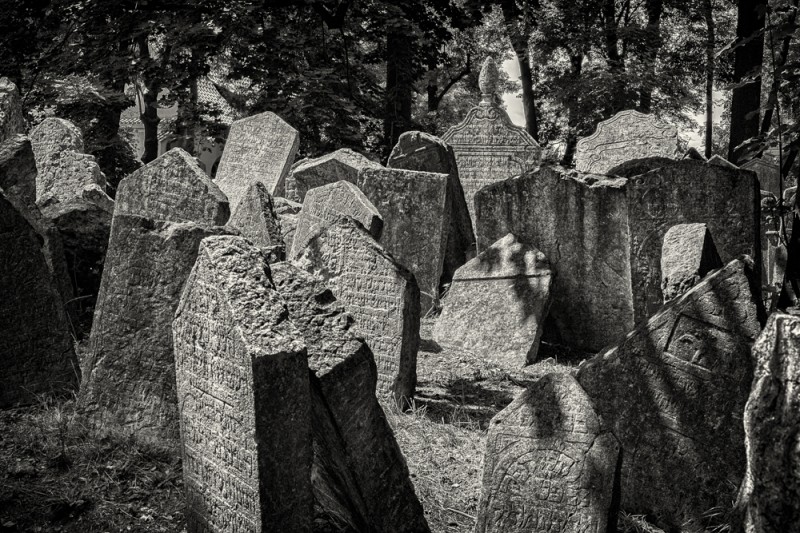
Prague, Czech Republic. July 2014 (II) ~ Pete Duval
Pete Duval lives in Philadelphia and teaches writing at West Chester University and in Spalding University’s Brief-Residency MFA program. His story collection Rear View (Houghton Mifflin: Mariner) won the Bakeless Prize, the Connecticut Book Award for fiction, and was a finalist for the Los Angeles Times Art Seidenbaum Award for First Fiction. His stories and essays have appeared in, among other places, Alaska Quarterly buy tramadol an Review, Appalachian Heritage, Letters (a literary journal of the Yale Institute of Sacred Music), The Massachusetts Review, and Witness. In both his writing and his photography, Duval believes that, as Joseph Conrad said, the duty of art is to “render the highest kind of justice to the visible universe, by bringing to light the truth, manifold and one, underlying its every aspect.”
I was in Kabul writing a story about street children and I came across this trash dump. I snapped the photo as the girl walked across the dump collecting plastic bottles and plastic bags.
Laurie Klein’s work has appeared in The Southern Review, Terrain, MAR, Atlanta Review, Natural Bridge, and other journals and anthologies. She has been a recipient of the New Letters Creative Nonfiction Prize and the Thomas Merton Prize for Poetry of the Sacred. Her chapbook, Bodies of Water, Bodies of Flesh, won first prize in the Predator Press chapbook contest.
I think about things, while walking—
like the number forty:
Pat Tillman’s retired red jersey
or winks in a power nap,
the Bible’s wilderness days of temptation,
direct dial code for Romania,
full-time work, the days of Lent,
not to mention the negative point
where Fahrenheit matches Celsius,
or Venus in retrograde,
and the Nebra Sky Disk—forty perforations
rimming a Bronze Age timepiece, as if
the ancients wearied of notching sticks
to reckon the wonder of each solar year,
and the fetus, turning, in watery silence,
Noah, bending before the rain
and later, one green sprig in a beak,
or, egg to old age, the life spans
of Monarchs, drones, those fruit flies
barnstorming the bowl of peaches,
and what about forty years
of sandals slapping the Sinai sands,
and skybread, and walking out Torah,
or the average life of the lumbering hippo
and Asian elephant, the lion
and bare-eyed cockatoo?—
and now, four decades for us, equally
wild, savory, perilous, graced.
I’ve no problem with relatives,
both living and departed, visiting
my dreams such as last night when
Uncle Fred dropped by my cell
in a Mexican jail and brought
a corned-beef sandwich. Nor is it
a bother when childhood friends
enter my dreams and challenge me
to tetherball at our old elementary.
I even tolerate strangers—
wayward spirits who fly erratically
into my dreams like bats
feeding along a stream.
But phone calls in dreams haunt me—
crackly voices conveying messages
barely comprehensible yet urgent.
I want to shout back at them—This
is a dream, just deliver the message
in person! But my voice is paralyzed—
I can only listen.
I wake
and wonder if there is a dimension
where some spirits are trapped like fish
in small pools when tides recede.
To reach us they must place calls
through a benign galactic operator
who plugs them into a switchboard
of stars and says: Your party
is dreaming—you have one minute.
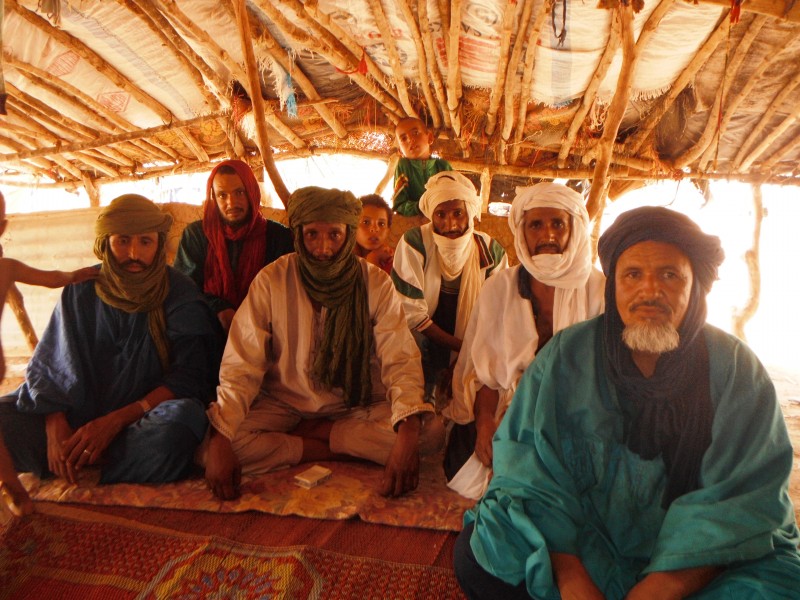
Tuareg war refugees in Burkina Faso
I visited the Mentao Red Cross Refugee Camp in northern Burkina Faso in May 2012 to talk to Tuareg and Arab refugees from the civil war in neighboring Mali. The camp is 30 miles from the border with Mali, where the conflict had produced a half million refugees, about 100,000 in Burkina Faso. The war was still fresh and the Mentao camp was receiving thousands of new arrivals every day, fleeing the coalition of jihadist groups who overran northern Mali. The Tuareg men in this picture, merchants and cattle herders, had been in the camp only a few days. Ironically, as a journalist, I was something of a refugee myself, having been forced to flee into Burkina Faso after rebels of the Malian jihadist group Ansar Dine threatened to attack the village in Mali where I was doing interviews.